

an exploration from the Indus civilisation onwards
Introduction
The mythology of Pakistan is a rich and layered heritage, shaped by centuries of cultural, religious and spiritual influences. From the mysterious symbols of the Indus civilisation to the poetic mysticism of the Sufis and vibrant folk tales, Pakistani mythology is not a closed chapter but a dynamic collection of stories that continues to evolve. This article is the first part of a series exploring the mythical history of Pakistan in chronological order. We begin with the oldest known culture in the region: the Indus civilisation.
1. The Indus civilisation: myths shrouded in silence
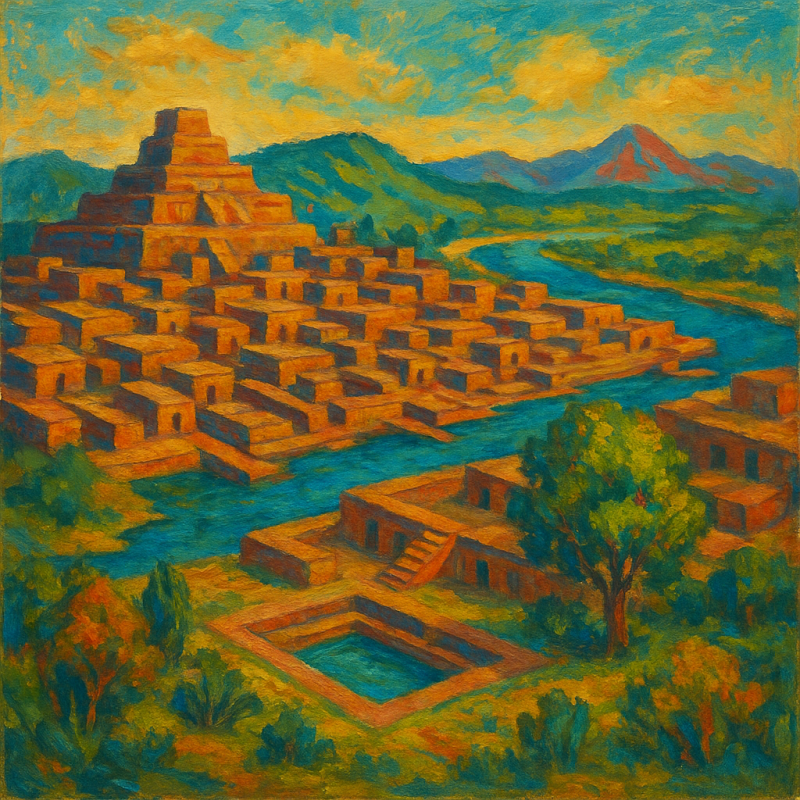
The Indus civilisation (c. 2600–1900 BCE), with cities such as Mohenjodaro, Harappa and Lothal, was one of the world’s first major urban societies. Although the script of this culture has still not been deciphered, archaeological finds offer valuable clues about its religious and ritual life. Countless seals depict animals, ritual postures and symbolic figures.
One of the most striking figures is a horned, squatting man in a yogic posture, often interpreted as a proto-form of Shiva (the so-called Pashupati, lord of the animals). Some researchers see in this figure early forms of shamanism or meditative ritual. Other seals show female figures that may point to a mother goddess or fertility cult.
The advanced city planning and bathhouses in Mohenjodaro suggest ritual purification and a water cult, motifs that reappear in later religious traditions such as Hinduism and Buddhism. Although the myths of this civilisation have not come down to us in written form, its symbolic legacy is an unmistakable precursor to later religious and mythological systems in South Asia.
2. Vedas and Hindu myths in the northwest
After the decline of the Indus civilisation, Indo-Aryan peoples entered the region and brought Vedic culture with them. The oldest Veda, the Rigveda, was presumably composed in the northwest of the subcontinent (present day Punjab and parts of Pakistan). This made the area a core region for the development of early Hindu myths.
The Vedic pantheon includes figures such as Indra (the thunder god), Agni (fire), Varuna (cosmic order) and Soma (the divine drink). These gods fought demonic forces, created the cosmos and safeguarded order. The Vedas thus laid the foundations for the Hindu worldview, in which myths and rituals are closely intertwined. In local traditions in Sindh and Punjab, echoes of these early religious ideas can still be heard.
Buddhist influences in Gandhara
In the centuries that followed, northwest Pakistan became a centre of Buddhism, particularly during the rule of the Kushans (1st–5th century CE). The region of Gandhara, with cities such as Taxila and Peshawar, was renowned for its Greco-Buddhist art and served as a hub for pilgrims and monks.
An important part of Buddhist mythology in this region was formed by the Jataka tales, stories about the previous lives of the Buddha. These were depicted in reliefs and sculptures on stupas. Wellknown myths, such as that of King Sibi (who gave his flesh to a hawk in order to save a dove) or the deer that sacrificed itself to help others, embodied ideals such as compassion, wisdom and self-sacrifice. Gandhara was not only a religious centre, but also a mythical landscape that brought spiritual ideals to life in image and story.
4. The Islamic period and Sufi mysticism
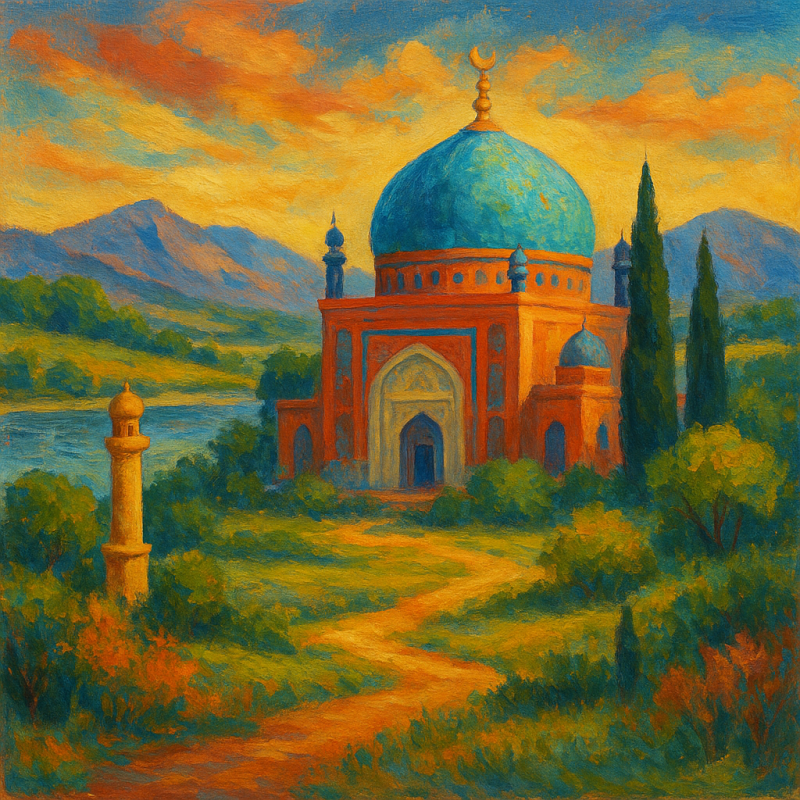
With the arrival of Islam in the 8th century, Pakistan’s religious landscape changed profoundly. Islam introduced a strictly monotheistic faith, but within folk culture countless legends arose about saints, miracles, jinn and sacred places. A special role was played by the Sufis: mystics who emphasised love, divine experience and inner purification.
Sufi saints such as Lal Shahbaz Qalandar, Shah Abdul Latif Bhittai and Bulleh Shah remain central figures in Pakistani spiritual culture to this day. Their shrines are places of pilgrimage where people seek healing, protection and spiritual insight. The stories about these saints, full of visions, miracles and journeys, form a kind of Islamic mythology in which religious devotion merges with mysticism and folk belief.
5. Folk tales and supernatural beings
Alongside religiously inspired myths, Pakistan has a rich tradition of folk tales passed down from generation to generation. Stories such as Heer Ranjha, Sassi Punnu, Sohni Mahiwal and Mirza Sahiban revolve around love, loss and tragedy, often with a spiritual or magical undertone. These tales function as cultural archetypes in which human emotions, social tensions and mystical elements come together.
In addition, folk belief teems with supernatural beings, such as the Churail (a female spirit often seen as a vengeful soul) and the Pari, a fairy-like figure symbolising beauty, magic or seduction. Such beings live on in fairy tales, nightmares and village stories and form part of Pakistan’s vivid mythical landscape.
The mythology of Pakistan is neither isolated nor static, but a living network of stories stretching from the Neolithic period to the present day. Each era has produced its own myths, which together help shape the country’s cultural identity. By starting with the Indus civilisation and then following history step by step, a profound and layered picture emerges of a land in which history and imagination constantly flow into one another.